
Project 1
PROJECT 2
PROJECT 3
PROJECT 4
PROJECT 5
project 6
Empowering Refugee Girls and Women in Nairobi


Creating Pathways to Education, Skills, and Economic Independence
Thousands of refugee girls and women in Nairobi face barriers that limit their access to education, employment, and economic opportunities. Displacement, poverty, digital exclusion, and protection risks such as gender-based violence and exploitation continue to affect their ability to build secure futures.
This project provides refugee girls and women with the tools they need to move from vulnerability to resilience through education support, digital skills, livelihood training, mentorship, and community inclusion.
Our Approach
We combine four key interventions:
📚 Education & Retention Support
Helping refugee girls remain engaged in learning through educational resources, mentorship, and safe learning environments.
💻 Digital Skills Development
Providing technology access and digital literacy skills that open pathways to future education and employment.
💼 Livelihood & Entrepreneurship Skills
Equipping women and girls with practical, market-relevant skills for income generation and economic independence.
🤝 Protection & Mentorship
Strengthening confidence, psychosocial wellbeing, and community support systems for refugee families.
Pilot Initiative
The six-month pilot will support 20 refugee girls and women in Nairobi through:
Investment Required: KES 3,500,000 (Approx. USD 23,000)
Expected Outcomes
Join Us in Creating Opportunities
Together, we can empower refugee girls and women to overcome barriers, develop skills, and build sustainable futures.
Partner with us to transform lives through education and opportunity.
Empowering Refugee Women Through Vocational Skills in Nairobi

From Vulnerability to Self-Reliance
Refugee women in Nairobi face high levels of unemployment, poverty, and social exclusion. Many are young mothers or have experienced interrupted education, limiting their access to formal employment and stable income.
Without practical skills and opportunities, many remain dependent on unstable informal work or humanitarian aid.
This project provides a pathway to dignity and independence by equipping refugee women with marketable tailoring skills, income opportunities, and community support.
Our Approach
We focus on practical, hands-on empowerment through:
🧵 Vocational Skills Training
Providing structured tailoring and garment production training using both domestic and industrial sewing machines.
💼 Income Generation Pathways
Equipping women with skills to start small businesses, access local markets, and earn sustainable income.
🏭 Training & Production Space
Establishing a fully equipped community workshop for learning and small-scale production.
🤝 Mentorship & Support
Providing continuous coaching, confidence-building, and support throughout the training journey.
Pilot Initiative
This 12-month program will support 25 refugee women in Kasarani, Nairobi through:
Investment Required: KES 4,051,950 (Approx. USD 27,000)
Expected Impact
Join Us in Empowering Women
By investing in refugee women, we create stronger families, resilient communities, and sustainable local economies.
Partner with us to transform skills into livelihoods and opportunity.
Empowering Girls Through Education & Sustainable Livelihoods in Nakuru

Keeping Girls in School, Preparing Them for Life
In Nakuru County, many girls face barriers that prevent them from completing their education. Poverty, gender norms, teenage pregnancy, and limited access to skills training often lead to school dropout and long-term economic vulnerability.
This project addresses these challenges by ensuring girls not only stay in school but also gain practical skills, confidence, and opportunities for a sustainable future.
Our Approach
We deliver a holistic model that connects education with real-life opportunities:
📚 Education Support & Retention
Providing learning materials, mentorship, and support to keep girls in school and reduce dropout.
💻 Digital & Academic Skills
Strengthening academic performance while building digital literacy for future opportunities.
🌱 Sustainable Livelihood Skills
Equipping girls with practical skills in areas such as agribusiness, entrepreneurship, and green enterprises.
🤝 Community Engagement & Mentorship
Working with families and communities to create safe, supportive environments for girls’ education.
Pilot Initiative
This pilot program will support vulnerable girls in Nakuru County through:
Investment Required: Ksh 3,000,000 (Approximately USD 25,000
Expected Impact
Join Us in Empowering Girls
Investing in girls creates stronger families, resilient communities, and sustainable economic growth.
Partner with us to transform education into opportunity and long-term empowerment.
Girls’ Education and Digital Livelihoods
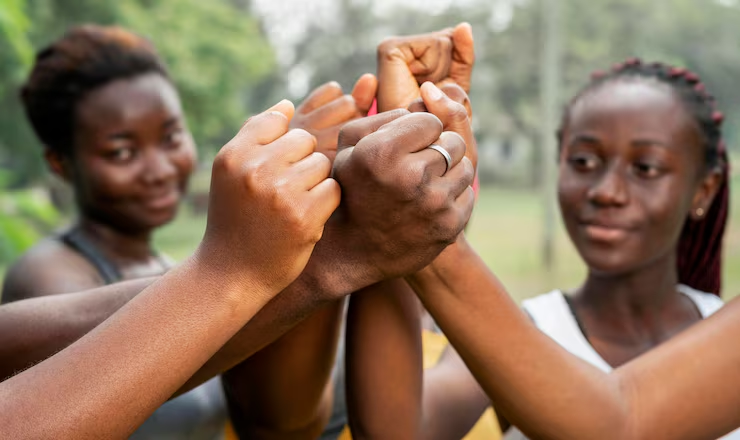
Opening doors to education, digital skills, and sustainable economic opportunities
Girls and young women face barriers to education, digital skills, and employment due to financial constraints, limited technology access, and unequal opportunities. Familyhood and Bright Life bridges these gaps through educational support, digital skills training, mentorship, and pathways to employment and entrepreneurship, empowering young women to achieve economic independence.
Our Approach
Educational support: Identify girls facing financial or social barriers to education and connect them with appropriate learning support, school retention assistance, and educational resources.
Digital literacy: Provide foundational training in computer use, internet navigation, online safety, digital communication, and productivity tools.
Digital livelihood skills: Introduce participants to practical skills such as graphic design, digital marketing, content creation, basic coding, and other locally relevant digital services.
Mentorship and career guidance: Connect participants with women professionals, educators, entrepreneurs, and technology practitioners who can offer guidance and encouragement.
Employment and entrepreneurship pathways: Support participants in developing portfolios, preparing CVs, identifying opportunities, and exploring freelance work or small digital businesses.
Safeguarding and inclusion: Create a supportive learning environment with appropriate safeguarding procedures and reasonable accommodations for participants with disabilities.
Pilot Initiative
The proposed pilot will support 100 girls and young women over 12 months in selected communities in Nairobi and Nakuru counties.
The pilot will include:
– Community outreach, beneficiary identification, and baseline assessments.
– Digital literacy training and access to appropriate learning devices.
Structured practical training in selected digital livelihood skills.
– Mentorship sessions and exposure to career and entrepreneurship opportunities.
– Portfolio development, career preparation, and connections to prospective employers or clients.
– Follow-up assessments to track skills development, continued education, and economic outcomes.
PROPOSED PILOT INVESTMENT – KSh 6,500,000 (US$50,000)
Expected Impact
The pilot aims to achieve the following results:
- 100 girls and young women enrolled in the programme.
- At least 80 participants complete the core learning and digital skills pathway.
- At least 70 participants demonstrate improved digital literacy and practical skills.
- At least 50 participants develop a portfolio, practical project, or other evidence of their skills.
- At least 30 participants access further education, internships, employment, freelance assignments, or entrepreneurship support within the follow-up period.
Help us turn educational access into lasting opportunity.
Your support can help provide learning resources, digital training, mentorship, and practical pathways to employment for girls and young women who might otherwise be left behind.
Partner with us to build a future in which every girl!
EdTech Solutions for Underserved Learners
Making quality learning more accessible through affordable, inclusive, and context-appropriate educational technology.
Familyhood and Bright Life aims to bridge this gap by promoting practical educational technology solutions designed around the realities of underserved schools and learners. The project will explore approaches that make digital learning accessible even in settings where electricity, connectivity, devices, or technical support are limited.
Our Approach
Learning needs assessment: Work with schools and communities to identify barriers to learning, gaps in educational resources, and the specific needs of teachers and learners.
Appropriate technology: Explore offline-capable digital libraries, shared devices, local content servers, educational applications, and other solutions suited to low-connectivity environments.
Relevant educational content: Support access to age-appropriate, curriculum-aligned materials, including digital books, interactive resources, instructional videos, and supplementary exercises.
Teacher capacity development: Train teachers to use digital resources in lesson preparation, classroom delivery, learner engagement, and assessment.
Inclusive learning: Promote solutions that consider learners with disabilities, different learning needs, language requirements, and varied levels of digital familiarity.
Sustainability and local ownership: Establish maintenance arrangements, school-level technology champions, and practical plans for content updates and equipment management.
Pilot Initiative
The initial implementation will involve:
Selecting participating schools through a transparent needs assessment.
Assessing device availability, power supply, connectivity, curriculum requirements, and accessibility needs.
Deploying an appropriate educational technology package, potentially including shared devices and offline learning resources.
Providing teacher training and practical demonstrations of technology-supported lessons.
Supporting schools to integrate digital resources into regular teaching and independent learning.
Monitoring device utilisation, teacher adoption, learner participation, and implementation challenges.
Documenting lessons to guide future expansion to additional schools.
Expected Impact
10 underserved schools equipped with appropriate educational technology solutions.
Approximately 1,000 learners gain improved access to digital educational resources.
30 teachers trained in the practical use of educational technology.
At least 80% of participating teachers demonstrate regular use of the introduced resources during the supported implementation period.
Participating schools establish basic arrangements for device management, maintenance, and continued use.
Evidence collected on usage, teacher adoption, learner engagement, and opportunities for scale-up.
Help bring meaningful digital learning opportunities to underserved schools.
Together, we can help schools overcome barriers to digital learning and create more equitable opportunities for children, regardless of where they live or the resources available to their families.
Empowering Economic Livelihoods for Vulnerable Women in Nakuru
Supporting vulnerable women to build sustainable incomes
Women experiencing economic vulnerability often face interconnected barriers to earning a reliable income. Limited access to vocational training, productive equipment, start-up capital, markets, and business networks can make it difficult to establish sustainable livelihoods. These challenges can be particularly significant for women supporting children or other dependents, women from low-income households, and women facing displacement or other forms of social and economic exclusion.
Our Approach
Community mobilisation and needs assessment: Identify women experiencing economic vulnerability and assess their skills, priorities, household circumstances, and preferred livelihood pathways.
Vocational and practical skills training: Provide hands-on training in selected trades, with tailoring and garment production among the potential options.
Productive equipment and materials: Facilitate access to shared equipment, essential tools, and initial materials required to practise the skills acquired.
Entrepreneurship and financial literacy: Train participants in costing, pricing, budgeting, savings, record-keeping, customer service, and basic business management.
Market access and business linkages: Connect women to customers, local traders, institutions, suppliers, cooperatives, and other relevant market actors.
Group enterprise development: Explore shared production, collective purchasing, joint marketing, and cooperative business arrangements where these offer practical advantages.
Post-training mentorship: Provide follow-up support to help participants address operational challenges, improve product quality, retain customers, and manage business growth.
Pilot Initiative
The pilot will include:
Community outreach and selection of 25 eligible participants.
A baseline assessment of skills, household livelihood conditions, and business interests.
Practical vocational training in a selected livelihood area, potentially tailoring and garment production.
Training in entrepreneurship, financial literacy, savings, and basic business management.
Access to shared productive equipment, tools, and essential start-up materials.
Support to develop individual or group-based income-generating activities.
Market linkage activities to help participants identify customers and generate sales.
Follow-up mentoring to assess business activity, income trends, and sustainability.
PROPOSED PILOT INVESTMENT KSh 3,900,000 (US$30,000)
Expected Impact
25 vulnerable women enrolled in vocational and livelihood development activities.
At least 20 participants complete the practical training programme.
At least 20 participants demonstrate improved business management and financial literacy skills.
At least 15 participants establish or strengthen an income-generating activity within the follow-up period.
Participants gain improved access to productive equipment, market information, peer support, and business networks.
Participating women develop practical plans for sustaining and growing their livelihoods.
Your contribution can help fund practical training
By investing in women not only as trainees but as entrepreneurs and economic contributors, we can help build stronger households, more resilient communities, and sustainable pathways out of economic vulnerability.
 using WordPress and